

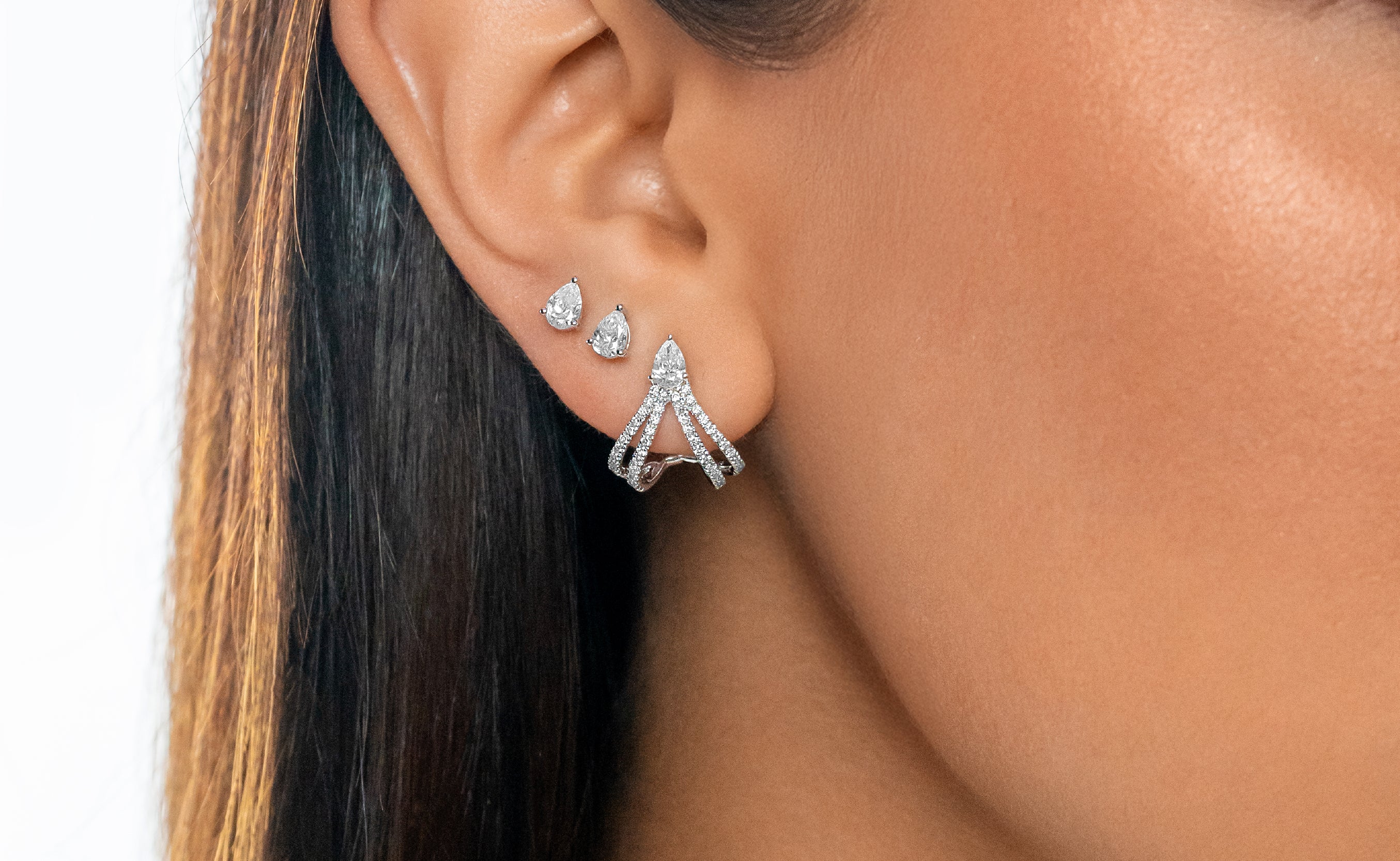
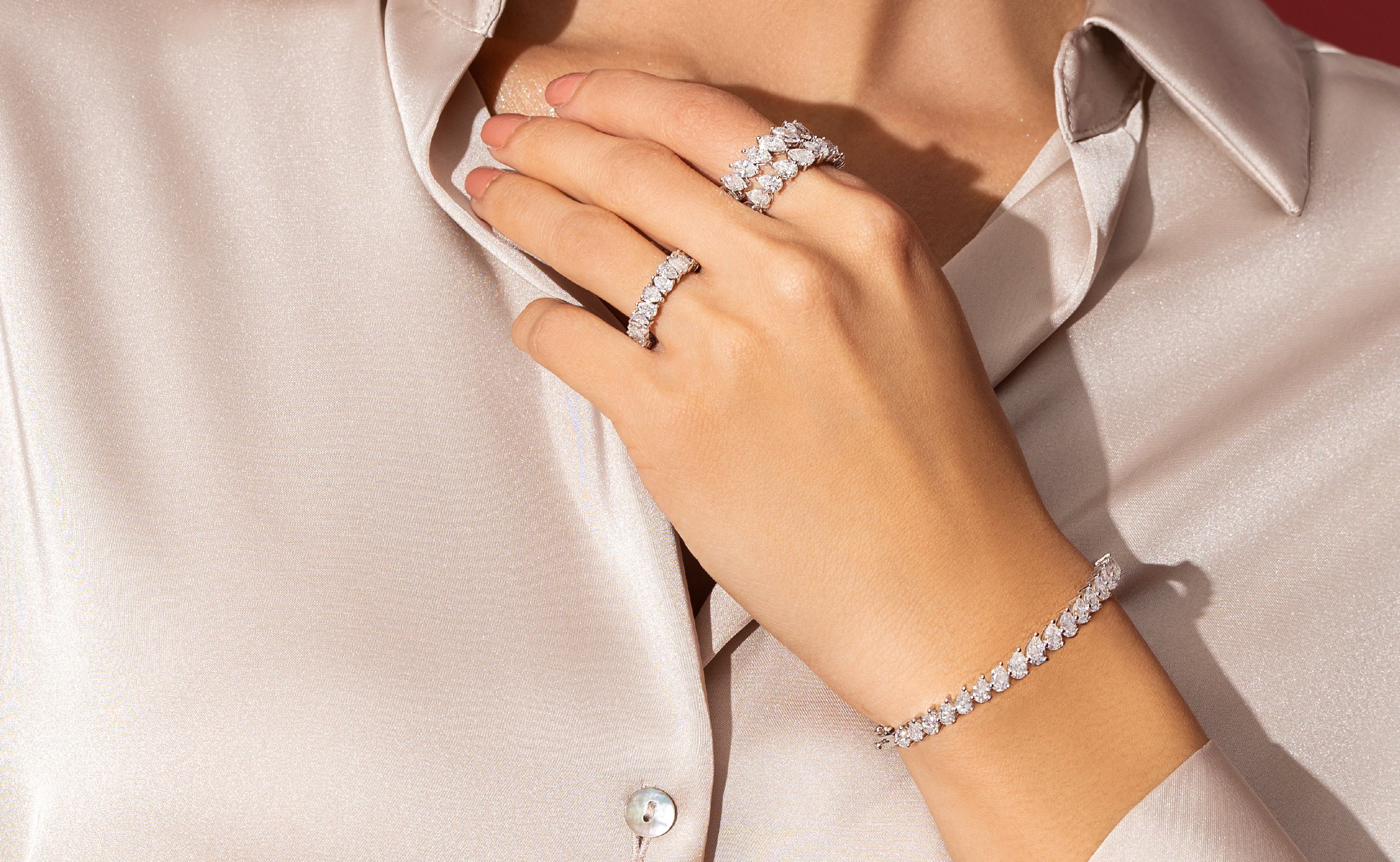
With a broad database of certified Diamonds, you're bound to discover the Diamond that is ideal for you. Diamonds come in various shapes and sizes, and each shape is unique and has different characteristics. The following blog will help you understand and get a brief overview into the “four C’s” of diamonds.
A diamond's value is determined by the famous "four C's": Cut, Carat, Color, and Clarity
These are the most popular diamond shapes and their characteristics below:
- Round Diamond: The classic round cut is the most popular shape out of all and has great lustre and fire. We always tell our clients, if you like something classic - go for the round.
- Princess Diamond: The stylish princess cut is famous for its stunning brilliance. The brightness is magnificent so it is often used for engagement rings.
- Emerald Diamond: An elegant emerald cut disclose the transparent beauty of the diamond. Emerald is a step-cut diamond which has great depth and lustre.
- Pear Diamond: The unique pear cut is a blend of the classic round and marquise shape. The flattering shape compliments fingers and features a sparkling look.
- Oval Diamond: The remarkable oval cut has an exemplary appearance with a modern twist. It’s now a trendy choice for engagement rings. It has an unbelievable brightness, like the classic round cut, yet in addition has the benefit of complementing slender effect to fingers.
- Radiant Diamond: The vibrant and lovely radiant cut combines the outline of an emerald cut diamond with an incredible sparkle of a round brilliant cut diamond.
- Asscher Diamond: The modern asscher cut diamond has an octagon shape with cut corners. They are sleek and its unique shape ideally complements the vintage style and has great shine and lustre. Asscher Diamonds are popular among celebrities.
- Cushion Diamond: Soft cushion cut diamond is the third most popular diamond cut since a decade. It often comes in square and rectangular shape, with rounded corners and slightly curved edges.
- Heart Diamond: The romantic heart shaped diamond is a symbol of love and radiates brilliance with the smooth shining curves. The proportions of a heart shaped diamond differs from one stone to another.
- Marquise Diamond: The rarest marquise cut highlights pointed closures with a bended center for a striking look. The marquise has the largest surface area compared to other diamond shapes. Unique and stylish, the slender Marquise cut will definitely makes you stand out in a crowd.
Diamond shapes such as round, princess, cushion, marquise, oval, radiant, pear, and heart-shaped diamonds are cut to optimize light return. These are known as brilliant-cut diamonds. The facets or underside of these diamonds joins at a point, which ensures maximum light return. Other shapes highlight the clarity of the diamond. Known as step cuts, includes asscher and emerald shaped diamonds. These shapes feature parallel facets that offers a subtle shimmer while emphasizing clarity.
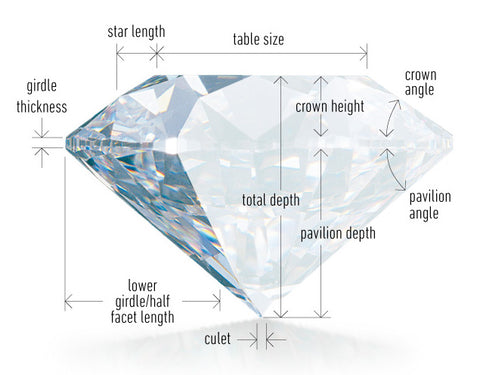
The term “Cut” has two references. 1. Diamond shape and 2. Quality. Determined by its proportions, symmetry, and polish.
Furthermore, diamonds similar in weight, color, and clarity differ in appearance and value.
There are three factors that determine a diamond’s cut quality:
Proportions: the relative sizes and angles of the diamond’s parts and facets
Symmetry: the precision of the cut design, especially the facets
Polish: the smoothness and luster of the diamond’s surface
Carat
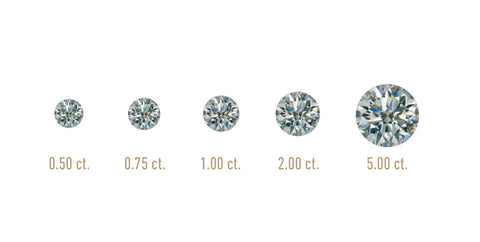
Carat weight is the most easy to comprehend among the 4C's. Ct is the estimation unit of the diamond. One point reciprocals to .01 Ct or 1/100 Ct. The carat of a diamond is a measure of the weight of the loose diamond.
1 carat = 200 milligrams. A carat is divided into 100 points.
1 carat = 100 points
Size Chart
Diamond prices increase with Carat weight but two diamonds of equal weight can have various costs dependent on three different characteristics:
Color, Clarity, and Cut. In diamond pieces with more than one diamond, the consolidated absolute weight of jewels in the piece are referenced as the complete Carat weight (T.W.).
Below diamond carat size chart will help you to determine the average size.
Color
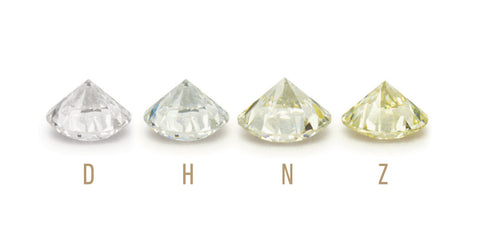
The Gemological Institute of America (GIA) uses a 12-letter alphabetical scale of D to Z. Using this scale, the diamond on scale D have the least amount of color. D is a colorless stone. The diamond at the higher end of the scale Z has deeper tones. The shade of a jewelry is one remarkable of significant worth. The rarest and most significant diamonds are "white" or colorless.
Clarity
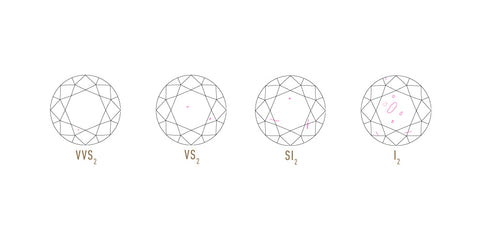
Clarity describes how perfect the stone is. If there are detectable imperfections by nature in the formation of the diamond, then it is less valuable. These flaws are called inclusions. Inclusions are undesirable because they interfere with the light passing through the diamond causing it to have less brilliance. Clarity is graded on a scale from internally flawless (IF) to included (I). A grade of flawless diamond will have no inclusions visible to a trained eye under 10x magnification.
When you buy a mounting and an inside precious stone independently, you'll have the diamond that matches your ideal design and quality attributes. Loose diamonds additionally take into account simpler evaluation of value, as it's increasingly difficult to conceal flaws that would some way or another be clouded by jewelry mountings.
Need help?
Frequently Asked Questions
Solitaire Jewels is a Dubai-based exclusive boutique specializing in natural diamond fine jewellery and a showroom in Kuwait as well. Our atelier crafts engagement rings, bridal jewellery, daily-wear diamond pieces, and bespoke high jewelry for clients across Dubai, the UAE, Saudi Arabia, Kuwait, Bahrain, and the wider GCC.
At Solitaire Jewels, every piece begins with the diamond. We hand-select natural diamonds for cut precision, brilliance, and integrity, then design and craft settings that honor — never compete with — the stone. Our name reflects our philosophy: the singular beauty of one exceptional diamond is the foundation of every piece we create.
Natural diamonds carry a permanence and rarity that lab-grown diamonds cannot replicate. A natural diamond is the product of a singular geological event — formed over a billion years deep within the Earth, mined, cut, and given as a symbol of something equally enduring. We believe that meaning is essential to fine jewelry.
Additional considerations:
Long-term value: Natural diamonds retain their value across generations; lab-grown diamonds depreciate substantially over time
Heirloom integrity: Natural diamonds become family heirlooms; lab-grown diamonds are produced and replaceable
Emotional weight: An engagement, a milestone, a legacy deserves a stone with permanence
Several principles distinguish Solitaire Jewels:
- Natural diamonds only — we do not work with lab-grown diamonds in any product
- Couture craftsmanship — every piece is hand-finished by master jewellers, not mass-produced
- Transparency — full certification, full grading documentation, full pricing disclosure on every piece
- Bespoke focus — custom design is our heart, not an afterthought
- GCC expertise — deep understanding of regional taste, cultural traditions, and bridal jewelry heritage
- Lifetime service — complimentary cleaning, inspection, and adjustment for life
Solitaire Jewels is headquartered in Dubai and showroom in Kuwait, with our flagship boutique serving clients across the UAE and the broader GCC. We ship across the UAE, Saudi Arabia, Kuwait, Bahrain and Qatar, with international shipping available on request.
For in-person visits to our Dubai boutique and Kuwait showroom, we recommend booking a private appointment to ensure dedicated attention from our gemologists and designers. Contact our concierge team to schedule.
